Cooking Measurement Converter
You might think a cooking measurement converter only saves time, but does it also keep your recipes from drifting off course? When you switch between cups, tablespoons, milliliters, and grams, small errors can change texture and flavor fast. If you cook from both US and metric recipes, you need a clear way to convert dry ingredients, liquids, and weights without guessing—because one wrong number can ruin the next step.
Key Takeaways
- Cooking measurement converters help quickly change cups, tablespoons, teaspoons, milliliters, ounces, and grams.
- Accurate conversions improve texture, flavor, and overall recipe results.
- Common basics: 1 cup equals 16 tablespoons, and 1 tablespoon equals 3 teaspoons.
- Metric units are useful for precise scaling, while US units are familiar in many recipes.
- Weighing ingredients, especially flour and sugar, gives more reliable results than volume alone.
What Is a Cooking Measurement Converter?
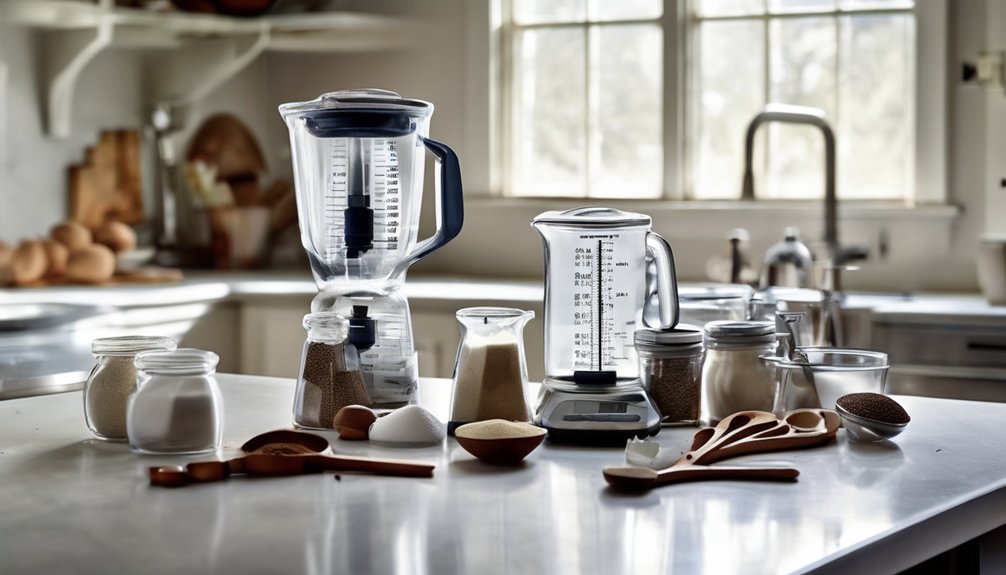
It supports conversion importance because small differences can change texture, taste, and results. With measurement accuracy, you can follow recipes more confidently and avoid waste. You’ll feel more at home in the kitchen when you can match the measurement style of any cookbook or website.
A good converter gives you quick, reliable answers, so you spend less time guessing and more time cooking with confidence.
Convert Cups, Tablespoons, Teaspoons, and Milliliters
You can convert cups, tablespoons, teaspoons, and milliliters with a few simple ratios that make everyday cooking much easier.
Remember these cooking ratios: 1 cup equals 16 tablespoons, 1 tablespoon equals 3 teaspoons, and 1 cup equals about 240 milliliters. From there, you can move between small and large amounts without guessing.
If a recipe asks for 2 tablespoons, you know that’s 6 teaspoons or about 30 milliliters. When you need ingredient substitutions, these conversions help you keep the texture and flavor on track.
You’re not alone in this step; once you learn the basics, you can scale sauces, dressings, and batters with confidence. Keep these numbers nearby, and conversion becomes a quick, reliable part of cooking.
Choose Between Metric and US Measures
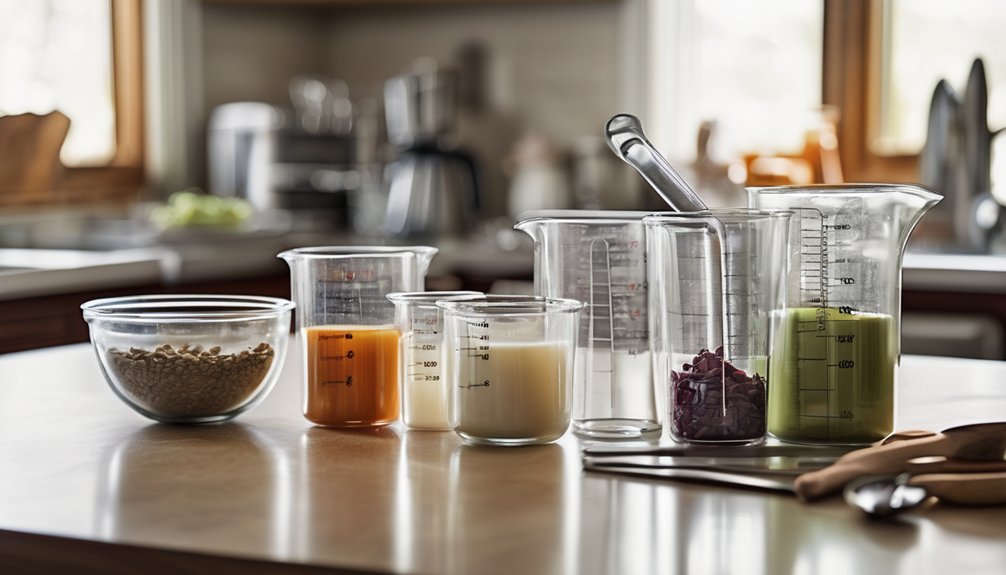
Metric measures often make scaling and precision easier, while US measures can feel more familiar in everyday American recipes. You can choose the system that fits your kitchen, your cookbook, and your comfort level.
Metric benefits show up when you want cleaner math and better measurement accuracy, especially if you cook with a scale or follow international recipes. US measures work well when you’re using family recipes or standard cups and spoons.
- Pick metric when you want exact ratios and easy scaling.
- Pick US when you want quick recognition and familiar labels.
- Match the recipe’s system so you stay confident and connected.
When you choose one system and stick with it, you reduce confusion and cook with more ease, accuracy, and belonging.
Convert Dry Ingredients Accurately
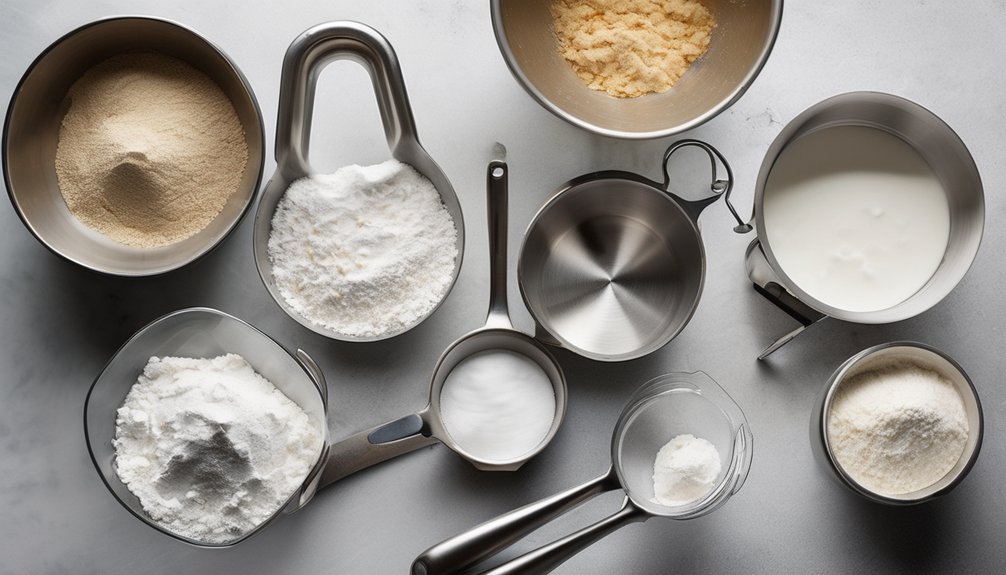
Start by weighing dry ingredients whenever possible, since a scale gives you the most accurate result. You’ll handle flour, sugar, salt, and spices more confidently when you match the right dry ingredient types to the right method. For accurate scaling, level cups with a straight edge and avoid packing unless the recipe says so. Here’s a quick guide:
| Ingredient | Best method | Tip |
|---|---|---|
| Flour | Weigh | Spoon, then level |
| Brown sugar | Pack lightly | Press just enough |
| Salt | Measure carefully | Use a small spoon |
When you measure together, you’ll cook with the same trusted results your kitchen group expects. Keep your converter handy, check units, and stay consistent. That’s how you turn guesses into repeatable, reliable baking every time.
Convert Liquids Without Guessing
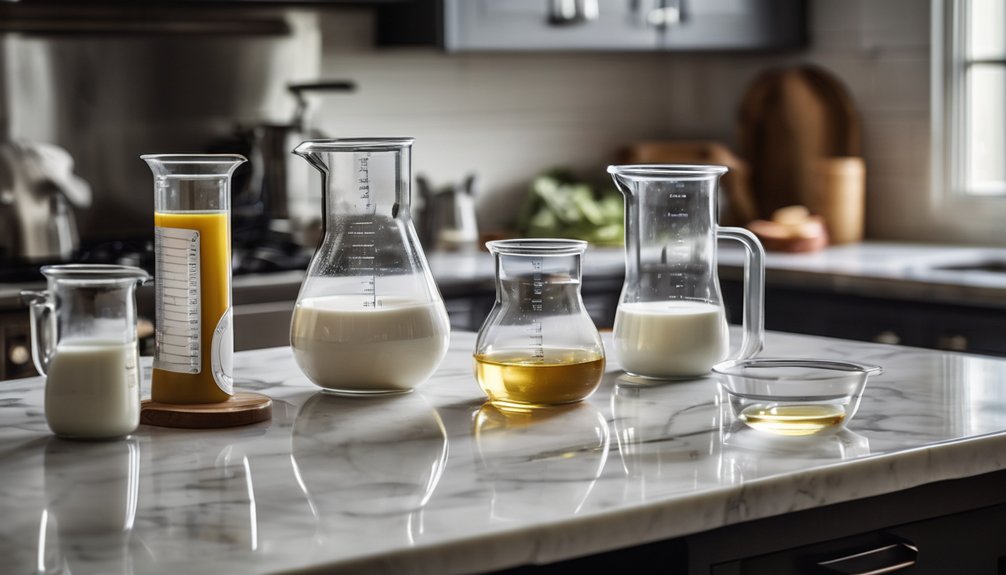
When you convert liquids, use a clear volume standard and a level reading so your measurements stay consistent. You’ll fit in with cooks who trust the same cup, spoon, or milliliter mark every time.
Check the recipe unit first, then match it with the right tool and read at eye level. Liquid density can shift how a substitute behaves, so milk, oil, and syrup don’t always pour the same way. For measurement precision, keep your container steady and avoid estimating by sight.
- Pour slowly until the meniscus or fill line meets the mark.
- Use a transparent measuring cup for easy checking.
- Wipe spills before you move on.
Scale Recipes Up or Down
Scaling recipes up or down is easier when you keep every ingredient in the same ratio, so you can double, halve, or quarter a dish without changing its balance.
You can use recipe scaling to fit your plans, whether you’re feeding two or hosting a crowd. First, decide how many servings you need, then compare that number with the original yield.
Multiply each ingredient by the same factor, and make portion adjustments with care so flavors stay consistent. If a recipe serves 4 and you need 10, use 2.5 times every amount.
Write the new amounts clearly, and check each step before you start cooking. When you scale together, you’ll feel confident in the kitchen and keep every meal aligned with your table.
Convert Ounces, Grams, and Pounds
Ounces, grams, and pounds all measure weight, so you can convert between them to match a recipe, a scale, or a label. Use kitchen tools that show one unit, then translate it with confidence.
For measurement accuracy, keep the numbers simple: 1 ounce equals about 28.35 grams, and 1 pound equals 16 ounces or about 454 grams. When you cook with your community, these conversions help everyone follow the same plan.
- 8 ounces = about 227 grams
- 1 pound = 16 ounces
- 2 pounds = about 907 grams
Check your scale setting, read the package unit, and convert only the amount you need. You’ll stay aligned with the recipe and feel at home at the stove.
Avoid Common Conversion Errors
Even with simple conversions, small mistakes can throw off a recipe, so check the unit before you calculate. You should compare ounces, grams, and pounds carefully, because mixing mass and volume leads to trouble.
Write the number first, then attach the unit, so you don’t swap values while cooking. When you scale a recipe, convert each ingredient separately instead of guessing from the total.
If a label uses decimals, keep them intact until the end. Rounded numbers can drift and change texture.
Use measurement tips like double-checking your math and reading the recipe twice. Handy conversion tricks help you stay calm and confident in the kitchen, and they make your cooking feel accurate, consistent, and welcoming every time you cook.
Quick Everyday Conversion Chart
A quick conversion chart saves time when you need to switch units in the middle of cooking. Keep it near your kitchen tools, and you’ll move through recipes with confidence.
Use these cooking tips to stay on track:
- 1 tablespoon equals 3 teaspoons, so you can scale dressings and sauces fast.
- 1 cup equals 16 tablespoons, which helps when you’re measuring dry or liquid ingredients.
- 1 pint equals 2 cups, a handy guide for soups, broth, and batters.
When you spot a measurement on a package, glance at your chart and match it right away. You’ll feel prepared, organized, and part of a kitchen rhythm that works.
A simple chart turns guesswork into smooth, shared cooking.
When to Use a Measurement Converter
Use a measurement converter whenever a recipe switches between metric and imperial units, or when you need to resize a dish for more or fewer servings. You’ll keep measurement accuracy and avoid guesswork, especially with baking, sauces, and spice blends. When you cook with a new recipe, check the units first and convert before you start. These conversion tips help you stay organized and confident in the kitchen.
| Situation | Why it helps |
|---|---|
| Metric to imperial | Prevents errors |
| Scaling servings | Keeps ratios right |
| Mixed recipes | Saves time |
If your kitchen feels like a shared table, a converter helps everyone follow the same plan. Use it for unfamiliar labels, international cookbooks, and last-minute adjustments.
Conclusion
A cooking measurement converter helps you move between cups, grams, milliliters, and ounces with confidence. You’ll save time, reduce waste, and keep recipes consistent, whether you’re measuring dry ingredients or liquids. Some cooks assume all conversions are exact, but that’s not always true—ingredient density and packing change results. Use a converter as a reliable guide, then adjust for the recipe and your tools. That way, you’ll cook more accurately and waste less.