
Unit Converter
You enter a value, you choose a unit, you get a conversion. A unit converter turns measurements into comparable numbers across metric, imperial, and scientific systems, so you can reduce error and standardize results. It matters in engineering, trade, and lab work, where small discrepancies affect decisions. But the real value appears when you need to compare units that don’t align neatly.
Key Takeaways
- A unit converter changes a value from one measurement unit to an equivalent value in another unit.
- It helps with accurate calculations in science, engineering, trade, travel, and everyday tasks.
- Users should enter the value, select the source unit, and choose the target unit for conversion.
- Common conversions include length, volume, weight, and temperature, which may require different methods.
- Accurate unit conversion reduces errors and improves comparison, communication, and standardization.
What Is a Unit Converter?

It compares a source unit with a target unit and produces an equivalent result without changing the underlying quantity. This precision matters when you work with engineering, science, trade, or travel measurements.
You’ll also see unit converter benefits in reduced calculation error and faster comparison across datasets.
Historical unit systems varied by region, craft, and era, which created incompatible standards. A converter bridges those differences, helping you belong to a shared measurement framework and communicate accurately with others.
How to Use a Unit Converter
To use a unit converter, you first enter the source value, then select the original unit and the target unit so the tool can apply the correct conversion factor. You’re in control when you verify each field before conversion. Most unit converter apps and online converters present a simple interface, so you can work quickly without losing accuracy.
- Enter the measured value exactly.
- Choose the source unit.
- Choose the target unit.
- Review the output and rounding.
If the result looks off, check input order, unit labels, and any preset formatting rules. You’ll fit right in with users who confirm assumptions and validate outputs.
This approach reduces error, supports repeatable calculations, and keeps your workflow consistent across tasks.
Common Unit Conversion Types
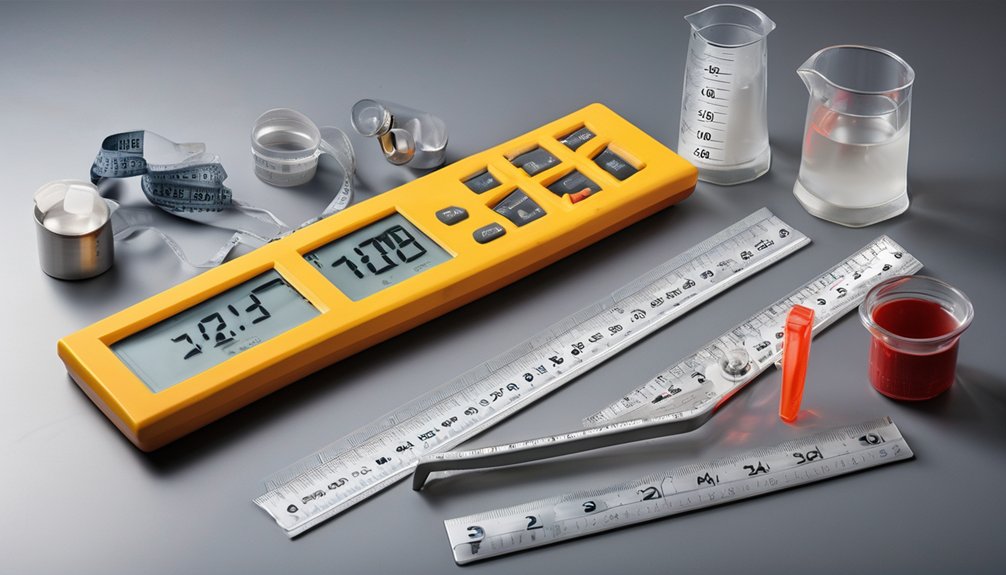
Common conversions usually fall into a few practical groups, and each one relies on a specific relationship between units. You’ll most often handle length conversions, volume conversions, weight conversions, and temperature conversions, because these cover everyday and technical work.
For length, you compare linear measures such as meters and feet. For volume, you track capacity across units like liters and gallons. For weight, you convert mass-related values with attention to scale. For temperature conversions, you apply formula-based shifts, not simple multiplication.
When you understand the category, you can choose the right method and avoid errors. That shared structure helps you work confidently with others who rely on exact measurements, whether you’re checking specs, reading labels, or standardizing data across systems.
Metric to Imperial Conversion Examples
- For length conversion, multiply 10 centimeters by 0.3937 to get 3.94 inches.
- For distance, convert 5 kilometers by multiplying by 0.6214, which gives about 3.11 miles.
- For weight conversion, turn 2 kilograms into 4.41 pounds using the factor 2.2046.
- For volume, convert 1 liter to 33.8 fluid ounces with the standard factor.
When you practice these examples, you build fluency and fit naturally into technical work where shared units matter.
Why Accurate Unit Conversion Matters

Accurate unit conversion matters because even small errors can cascade into flawed calculations, mismatched specifications, and unsafe decisions. When you convert values, you protect the integrity of your work and support the team that relies on it.
In engineering, manufacturing, science, and everyday planning, the precision importance is clear: a misplaced decimal or wrong factor can distort results and compromise quality. You can reduce conversion errors by checking source units, verifying target units, and using trusted conversion methods.
That discipline helps you communicate clearly, compare data reliably, and stay aligned with shared standards. When you treat every conversion as a controlled step, you strengthen accuracy across the process and contribute to a community that values dependable, repeatable results.
When a Unit Converter Helps Most
- Engineering: Convert metric and imperial inputs before design decisions.
- Science: Check lab data from mixed instruments with exactness.
- Travel: Translate distances, temperatures, and fuel quantities instantly.
- Commerce: Standardize product specs across suppliers and regions.
When you use a converter well, you join a community that values accuracy, speed, and shared understanding.
That’s how you avoid errors and keep every calculation traceable.
Conclusion
When you use a unit converter, you turn rough estimates into exact values, like aligning scattered marks into a clean measurement grid. You can move from metric to imperial units in seconds, reducing errors and sharpening decisions in engineering, science, or trade. This tool helps you compare data with confidence, keep calculations consistent, and save time. With accurate conversion, you’ve got a clear, standardized path from one measurement system to another.