
Habit Tracker
A habit tracker helps you turn good intentions into daily action by showing you what you’re actually doing, not just what you plan to do. You can use a simple app, a notebook, or a printed chart, but the real value comes from consistency and clear feedback. When you choose the right habits and track them well, you start to see patterns that can change your results—if you set it up the right way.
Key Takeaways
- A habit tracker helps build consistency by making daily actions clear, simple, and easy to monitor.
- It provides feedback on progress, missed days, and next steps, improving accountability and focus.
- Choose a format that fits your style, such as a notebook, app, calendar, or paper planner.
- Keep the layout simple with checkboxes, notes, and one recording location for easy tracking.
- Use habit stacking, rewards, and weekly reviews to stay motivated and improve long-term success.
What Is a Habit Tracker?

This small system supports habit formation by turning your goals into clear, trackable steps. It also makes behavioral change feel more manageable because you’re not guessing what to do next.
You can use a notebook, app, or calendar—whatever fits your routine and makes you feel part of a group that’s moving forward together.
When you track consistently, you create a practical path toward the identity you want and keep your efforts focused on real, daily wins.
Why Habit Tracking Helps You Stay Consistent
Habit tracking helps you stay consistent because it gives you immediate feedback and a clear next step every day. You can see what’s working, notice missed days fast, and adjust before momentum fades. That visibility builds mental clarity and makes goal visualization easier, so you’re less likely to drift.
When you share your tracker with accountability partners, you feel supported and stay committed. Use habit stacking to link new actions to routines you already trust, and watch how environment influence and emotional triggers affect your follow-through.
Small wins matter, so make progress celebration part of your routine with simple reward systems that keep you moving. You’re not doing this alone; you’re building a dependable rhythm with people and habits that help you belong and succeed.
Choose the Right Habit Tracker
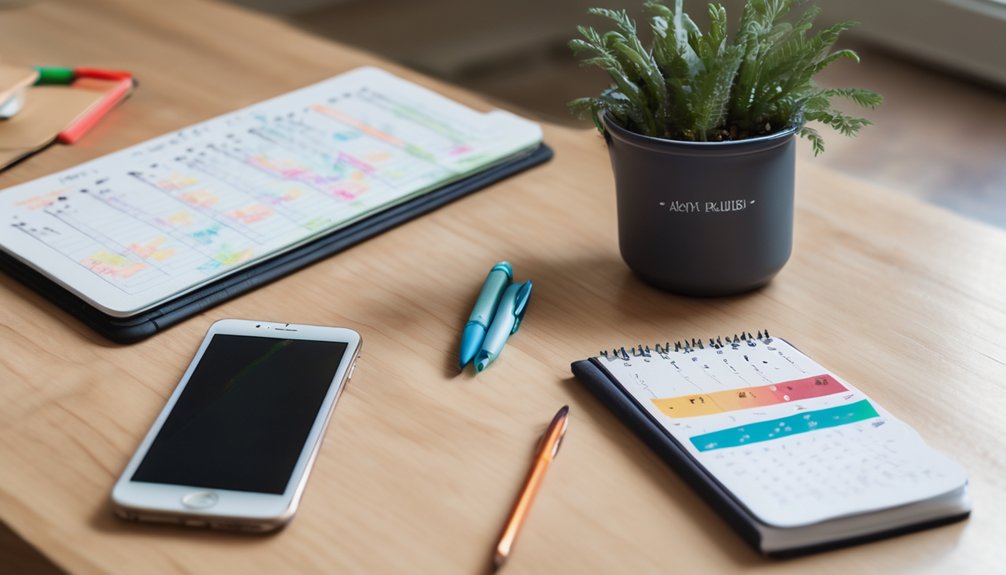
Which habit tracker fits your life best? You can choose digital tools if you want reminders on your phone and easy progress reviews.
Paper planners work well if you enjoy writing things down and seeing visual reminders on your desk. If you thrive with support, pick one that lets accountability partners check in with you.
Some trackers include reward systems that keep motivation high, while others make goal setting simple and clear. You can also look for habit stacking features that help you attach new actions to routines you already share with your community.
The best tracker should feel natural, encourage consistency, and fit your daily rhythm. When you choose a tool that matches your style, you’ll feel more connected, confident, and ready to keep going.
Pick Habits You Can Actually Keep
Now that you’ve chosen a tracker that fits your routine, focus on habits you can keep without burning out.
Pick realistic goals that match your life today, not the version of you that has endless free time. Start with one or two actions you can repeat most days, like drinking water, reading for ten minutes, or taking a short walk.
Small wins build confidence and help you feel like you belong in your own progress, not trapped by it. If a habit feels too big, shrink it until it’s easy to start.
Incremental changes matter more than perfect streaks, because consistency grows when you trust yourself. Choose habits that support your energy, then let momentum carry you forward.
Set Up Your Habit Tracker

Choose a simple layout that makes your habits easy to see and even easier to update. You’re building a system that supports you, so keep it clean and friendly. Whether you use paper or habit tracker apps, make sure your design fits your life.
- Put each habit in one row or column.
- Use checkboxes, dots, or color for visual tracking.
- Leave space for notes, wins, or quick adjustments.
Choose one place to record everything, then keep the labels short and clear. If you like, add a small section for streaks or goals so you can feel part of your progress.
The best setup helps you spot patterns fast, stay organized, and feel encouraged every time you open it.
Build a Daily Tracking Routine
With your habit tracker set up, the next step is to make it part of your day. Choose one simple moment, like morning coffee or bedtime, and use it for quick check-ins. Keep your daily rituals steady so tracking feels natural, not forced.
| Time | Action | Result |
|---|---|---|
| Morning | Review goals | Start focused |
| Midday | Note completion | Stay accountable |
| Evening | Do progress evaluation | End with clarity |
You don’t need perfection; you need consistency. Mark each habit honestly, then move on. If you miss a day, return without guilt and keep going. Small wins build momentum, and you’re part of a community of people who improve through repeatable action. Over time, this routine helps you stay connected to your goals and confident in your progress.
Spot Patterns in Your Habit Tracker
As you log your habits, look for repeat signals that show when you’re most likely to follow through or slip. You’re not guessing; you’re doing behavior analysis with your own data. Notice habit trends across days, moods, and settings so you can see what supports your progress.
- Track the time you start.
- Note who’s around you.
- Mark how you feel before you act.
These patterns help you spot your strongest moments and fit in with people who build momentum too. When you see a reliable pattern, lean into it and make it your default.
If a pattern keeps showing missed days, adjust the setup, not your worth. Your tracker becomes a shared roadmap to steady growth, and you belong in that progress.
What to Do When Motivation Drops
When motivation drops, lower the bar and keep the habit alive with the smallest possible action. You’re not failing; you’re navigating a motivation slump with your community of steady strivers. Pick a tiny version of the task and do it now. That keeps maintaining discipline simple and real.
| Action | Benefit |
|---|---|
| Open the app | Reconnect instantly |
| Do one minute | Protect momentum |
| Mark a tiny win | Build confidence |
| Restart tomorrow | Stay in the game |
Treat the habit like a teammate: show up, even briefly. Your consistency matters more than intensity. One small step today helps you feel included, capable, and ready to continue tomorrow.
Habit Tracker Tips for Long-Term Success
A habit tracker works best when you keep it simple, visible, and easy to use every day. To build sustainable habits, pair habit stacking with clear habit triggers, then place visual cues where you’ll see them. Use goal setting to choose one win at a time, and lean on accountability partners who’ll cheer you on.
- Track the few habits that matter most.
- Add reward systems that make progress feel real.
- Reflect weekly so you can adjust fast.
When you miss a day, reset quickly instead of quitting. Your streak grows through consistency, not perfection. Keep your tracker close, celebrate small wins, and stay connected to your community.
With steady progress reflection, you’ll turn effort into lasting momentum and habits that fit your life.
Conclusion
Your habit tracker is more than a page or app—it’s your compass, keeping you pointed toward the goals you want most. When you check in daily, you build momentum like a wheel gathering speed. Keep it simple, stay honest, and celebrate small wins along the way. Even when motivation fades, your tracker can light the path forward. Stick with it, and your habits won’t just grow—they’ll take root and thrive.