How to Calculate Square Footage Quickly and Accurately
Most people don’t realize that a small measuring error can throw off your entire square footage calculation. You can avoid that by measuring wall to wall, using consistent units, and multiplying length by width for simple spaces. If your room has alcoves, closets, or odd angles, break it into smaller shapes and add them up. There’s a faster way to keep it accurate, and it starts with one common mistake.
Key Takeaways
- Measure the room’s length and width with a tape measure or laser tool, using the same unit throughout.
- Multiply length by width to get square footage for rectangular spaces.
- For irregular rooms, divide the area into smaller rectangles, measure each, then add the results.
- Measure wall to wall and record each dimension immediately to avoid mistakes.
- Double-check all measurements and calculations before using the square footage for planning or purchases.
What Is Square Footage?
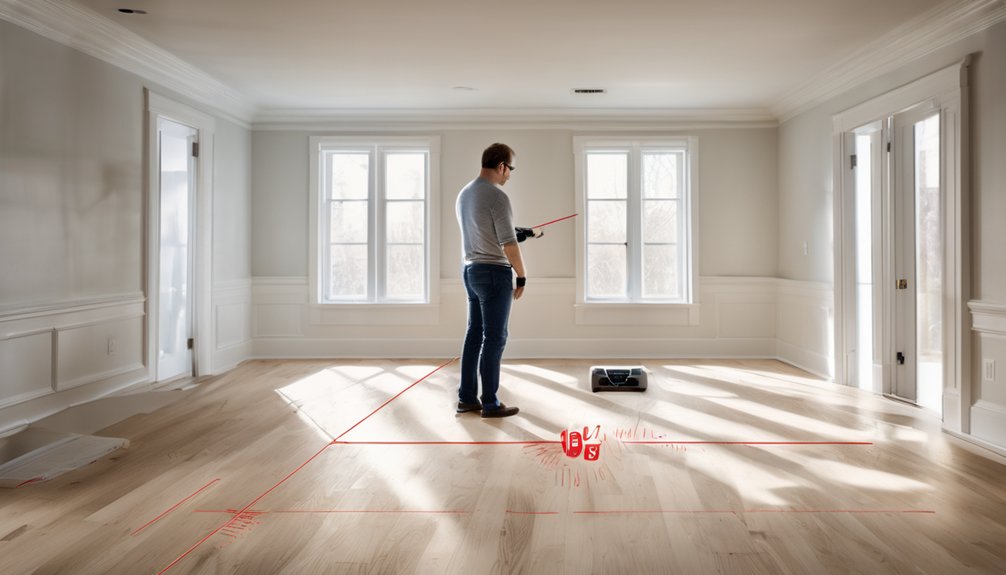
Square footage is the total area of a space measured in square units, usually square feet. You use it to understand how much room you actually have, whether you’re planning furniture, comparing homes, or checking listings.
In real estate, square footage helps you speak the same language as agents, buyers, and sellers, so you can make confident decisions. It also plays a key role in property valuation, since larger usable space often affects value.
When you know what square footage means, you can read floor plans, estimate costs, and avoid surprises. You’re not just measuring space; you’re learning how it fits your needs and your goals.
That clarity helps you feel informed, included, and ready to move forward with confidence.
Start With Length and Width
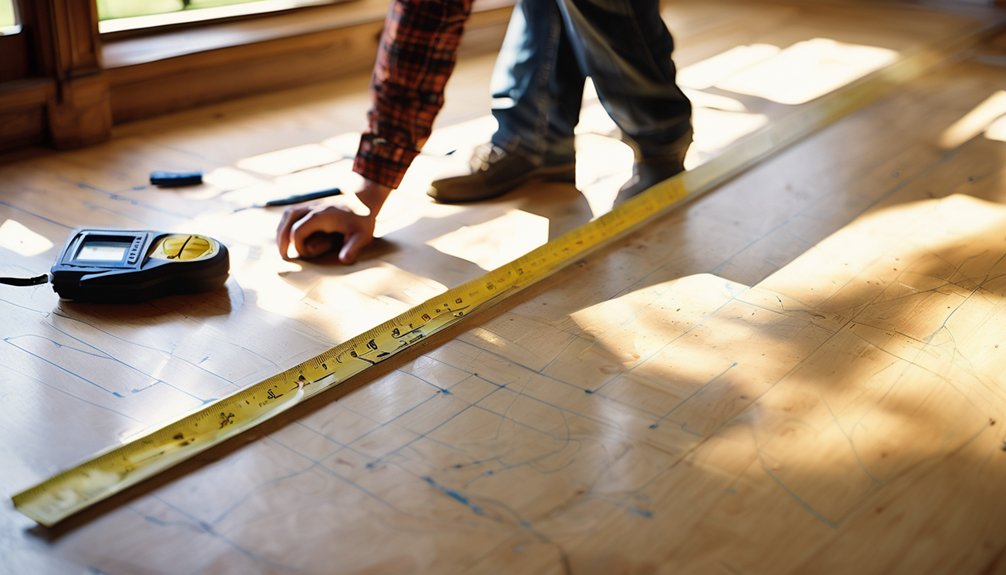
To calculate square footage, you first measure the length and width of the space in feet. Use a tape measure, stay level, and record each side carefully so your length measurements and width measurements are reliable.
If the room feels awkward or shared walls make it hard to reach, work with a partner and note the numbers together. Measure from wall to wall, not baseboard to baseboard, and keep your figures in the same units. You’ll get cleaner results when you double-check each reading before moving on.
For irregular spaces, break the area into smaller rectangles and measure each section separately. That way, you stay organized, avoid guesswork, and feel confident you’re doing it the right way with your team.
Calculate Square Footage
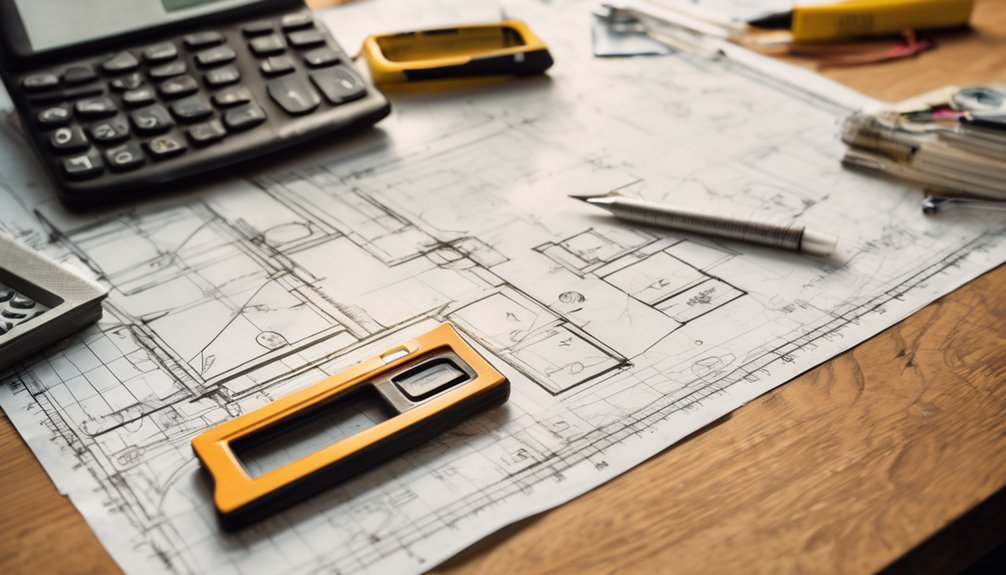
Once you’ve got the length and width, multiply them to get the square footage of a rectangular space. You can trust this simple formula because it handles most area calculations fast and cleanly.
If your room measures 12 feet by 10 feet, you’ve got 120 square feet. Use reliable measurement tools, like a tape measure or laser measurer, so your numbers stay accurate from the start.
Write each dimension in feet, then check your math before moving on. If you’re comparing rooms, keep the same units every time to avoid errors.
This quick process helps you estimate flooring, paint, and furniture needs with confidence. When you calculate square footage this way, you stay organized, save time, and feel ready to tackle the next step.
Measure Irregular Room Shapes
Irregular rooms work best when you break them into simple shapes you can measure one at a time. You’ll feel more in control when you map each section, then combine the results. Use reliable measurement techniques for alcoves, L-shapes, and bump-outs, and keep your notes clear so you stay aligned with the task.
| Room shape | What you do |
|---|---|
| L-shape | Split it into two rectangles |
| U-shape | Measure each arm separately |
| Alcove | Treat it as its own small rectangle |
| Curved edge | Approximate with the nearest simple shape |
These room shapes may look tricky, but you’re not alone in handling them. Measure each part carefully, record each area, and sum them once. That’s the cleanest path to accuracy.
Convert Inches, Feet, and Yards
Unit shifts can trip up even simple measurements, so convert everything to the same unit before you calculate square footage. You’ll work faster when you choose feet, because square footage uses feet by default.
If you’ve measured in inches, divide by 12 to get feet. If you’ve measured in yards, multiply by 3 to get feet. Keep your conversion methods consistent across every wall, nook, or segment so your numbers stay clean.
Use reliable measurement tools, like a tape measure or laser device, and write each result right away. That way, you won’t lose track of mixed units or second-guess your math.
When you convert first, you set yourself up for accurate area calculations and a smoother process that fits right in with the rest of your team.
Estimate Flooring and Paint Needs
With your measurements in feet, you can use square footage to estimate how much flooring or paint you’ll need. Multiply length by width for each room, then total the areas you plan to cover.
Use square footage to estimate flooring or paint needs: multiply length by width, then total the areas you plan to cover.
For flooring, check the box or product sheet for coverage per carton or roll, since flooring types vary in waste and pattern matching. Add a small buffer for cuts and doorways so you’re not caught short.
For paint, divide total wall square footage by the paint’s coverage rate per gallon, then compare that number with your chosen paint finishes, which may need extra coats.
Keep the same units, and you’ll make smart, confident buying decisions that help your project feel organized and on track.
Avoid Common Measurement Mistakes
Small mistakes can throw off your square footage fast, so double-check every measurement before you calculate. You’ll stay on track when you use the same measurement tools for every wall and keep your tape level. Mark each number clearly, and don’t round until the end.
Trust these accuracy tips:
- Measure in one unit only.
- Read the tape at eye level.
- Record each length immediately.
- Recheck every figure before multiplying.
You belong to the group that gets it right the first time when you stay organized and work methodically. If a number looks odd, measure again instead of guessing.
Clean, consistent notes help you avoid costly errors and give you a square footage result you can trust.
Measure Alcoves and Closets
Alcoves and closets count toward your total square footage, so measure each one separately before you add it in. You’ll get cleaner results when you treat every nook as its own shape. Measure the width and depth of each alcove, then multiply to find its area.
For closets, note the closet layouts first, because shelves, angled walls, and built-ins can change the usable footprint. If a closet has an L-shape, break it into smaller rectangles and total them.
Write down each measurement as you go, and label them clearly so you stay organized. By handling alcove dimensions and closet layouts this way, you’ll calculate a more accurate total and feel confident about the space you’re tracking.
Double-Check Measurements Before Ordering
Before you order flooring, tile, paint, or furniture, check every measurement again to make sure your numbers are right. You belong in the group that catches errors early and saves money. Use the same measurement tools each time, and keep them steady against the surface. Then compare each wall, niche, and opening with your notes for accurate scaling.
- Recheck length and width.
- Confirm every alcove and closet.
- Verify units stay the same.
- Record the final figure clearly.
If one number looks odd, measure it again before you commit. Small mistakes can lead to gaps, waste, or returns. A careful second pass gives you confidence, keeps the project on track, and helps your space turn out the way you planned.
Use a Square Footage Calculator
A square footage calculator can speed up the math and reduce errors when you’re measuring a room or space. You enter length and width, and the tool gives you a fast answer you can trust. These calculator benefits help you plan flooring, paint, and furniture with confidence, so you feel prepared, not overwhelmed.
| Input | Result | Use |
|---|---|---|
| 12 ft x 10 ft | 120 sq ft | Small bedroom |
| 15 ft x 20 ft | 300 sq ft | Living room |
| 8 ft x 8 ft | 64 sq ft | Closet |
Many online tools also handle odd shapes, so you can match your space without guesswork. When you use one, you join a smarter, simpler way to measure.
Frequently Asked Questions
How Do I Calculate Square Footage From a Triangular Area?
Calculate the triangular area by multiplying the base by the height, then dividing by two. You’ll get square feet if both measurements use feet. Keep your numbers tidy, and you’ll feel confident calculating fast.
What Tools Give the Most Precise Room Measurements?
You’ll get the most precise room measurements with digital tools, especially laser measuring devices. Pair them with a quality tape measure and floor plan app, and you’ll join pros who verify every dimension twice.
How Do I Measure Outdoor Spaces for Square Footage?
You measure outdoor spaces by sketching the area, breaking irregular shapes into rectangles, triangles, and circles, then using outdoor measurement techniques and landscape area calculations. Check boundaries, multiply dimensions, and total each section for accuracy.
Can Square Footage Include Wall Thickness or Trim?
Usually, you don’t include wall thickness or trim. About 80% of real-estate floor plans use interior dimensions, so measure carefully. Check local rules, then use wall thickness only if your trim measurement or code requires it.
How Do I Calculate Square Footage for Multi-Level Spaces?
You calculate square footage for multi-level layouts by measuring each level separately, then add the areas. Use consistent measurement techniques, include closets if needed, and verify stair landings so you get a precise total.
Conclusion
So, you’ve measured the room, done the math, and resisted the ancient ritual of “close enough.” That’s how you calculate square footage quickly and accurately without buying too much paint, too little flooring, or a couch that crowds the closet. Keep your units consistent, break odd shapes into simpler pieces, and double-check before you order. Use a calculator if you like—because even in home projects, confidence is best backed by arithmetic.