Square Footage Calculator
When you use a square footage calculator, you can turn basic length and width measurements into a reliable area estimate in seconds. You’ll also see how different shapes, units, and room layouts affect the result, which matters more than many people expect. Small measurement errors can change material estimates and costs, so the method you choose can make a real difference.
Key Takeaways
- Measure length and width in the same unit, then multiply them to calculate square footage.
- Use a square footage calculator to enter dimensions and get fast, accurate area results.
- Divide irregular spaces into smaller shapes, calculate each area, and add them together.
- Convert inches, feet, or yards consistently before calculating to avoid errors.
- Use the final square footage to estimate flooring, paint, and other material needs.
How to Use a Square Footage Calculator
To use a square footage calculator, you first measure the length and width of the space in the same unit, then enter those values into the tool to get the area.
You can then review the result to confirm the calculator benefits you need, including fast comparison and consistent measurement accuracy.
If the calculator accepts additional shapes, you can select the matching option and input the required values.
You don’t need to estimate or convert manually when the tool handles the arithmetic. That precision helps you stay aligned with others who value clear planning and dependable results.
How to Measure Square Footage in a Room
Start by measuring the room’s length and width with a tape measure, keeping both values in the same unit. You’ll get the most reliable result when you square the room dimensions by multiplying these two measurements.
If the room isn’t a perfect rectangle, divide it into smaller sections, measure each one, and add the areas together. Use measurement tools that give clear readings, and record each value immediately to reduce error.
Check for alcoves, closets, and other fixed features, because they change usable space. You don’t need special expertise to do this accurately; you just need careful attention and a shared standard for every measurement.
With a consistent method, you can compare rooms confidently and understand exactly how much floor space you’re working with.
How to Convert Inches, Feet, and Yards
Once you’ve measured a room, the next step is converting every value to the same unit before calculating area. You can treat inches conversion as a simple division by 12 to reach feet, then multiply by length and width.
When your feet measurement includes inches, convert the inches first so your numbers stay consistent. For yards calculation, divide feet by 3, or divide inches by 36, before you work with area units.
This keeps your square footage calculator accurate and easy to follow. If you prefer one system, choose feet and convert everything into that unit.
You’ll join a clear, repeatable method that reduces error and supports precise results across every room you measure.
How to Calculate Odd-Shaped Areas
Odd-shaped areas are easiest to handle when you break them into simpler sections, such as rectangles, triangles, and circles, then calculate each part separately and add the results.
You can treat irregular shapes as a set of measurable parts, which keeps your work accurate and manageable. Use area formulas for each section: length times width for rectangles, one-half base times height for triangles, and pi times radius squared for circles.
Then add the partial areas to get the total square footage. If a shape includes cutouts, subtract those areas from the whole.
You’ll fit in with careful builders and planners when you measure each segment cleanly and record the units consistently. This method keeps calculations precise, even when the outline isn’t simple.
How to Estimate Flooring and Paint
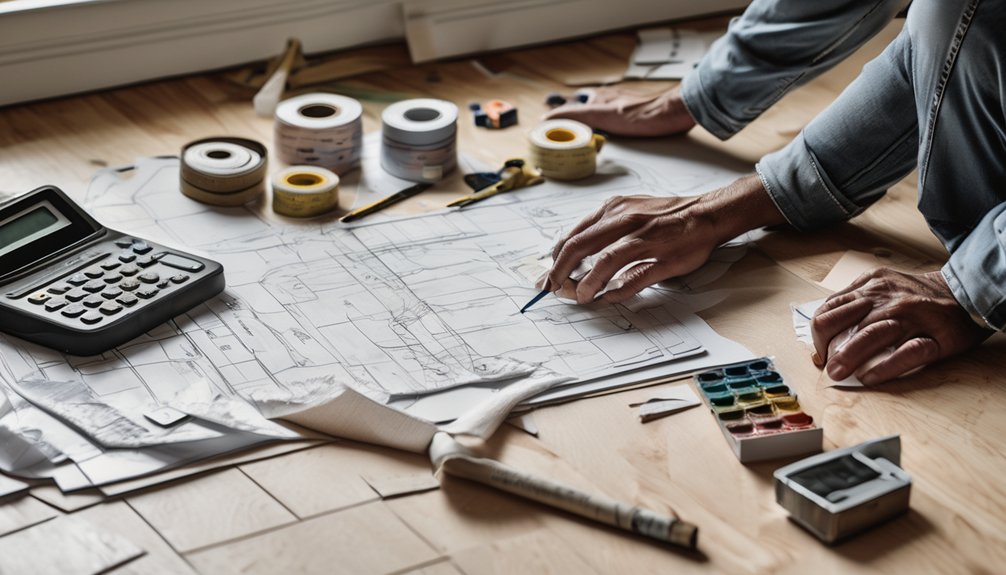
After you’ve calculated the square footage of each room or section, you can use those measurements to estimate flooring and paint with much better accuracy. You compare coverage rates, then convert area into material needs. Different flooring types cover at different package sizes, so check product labels before you buy. For paint, match room area to the can’s stated coverage and choose paint finishes, since sheen can affect how many coats you need.
| Material | Coverage | Note |
|---|---|---|
| Laminate | 20 sq ft/box | Verify waste factor |
| Carpet | varies | Use room shape |
| Paint | 350 sq ft/gal | Check finish type |
This method helps you plan confidently and stay aligned with your project group.
Common Square Footage Mistakes to Avoid
Even careful measurements can lead to costly errors if you overlook common square footage pitfalls. You should measure each wall, alcove, and opening consistently, because rounding too early weakens measurement precision.
Don’t assume every room is a simple rectangle; area misconceptions often come from ignoring closets, bay windows, or angled corners. You’ll also want to separate usable area from structural space, since trim, columns, and built-ins can distort totals.
Record units carefully, and keep feet and inches from mixing during conversion. If you’re working with a team, compare notes before you commit to a final figure. That shared check helps you catch omissions, supports confidence, and keeps everyone aligned on the same calculation.
When a Square Footage Calculator Helps Most
- Renovation planning: You can estimate flooring, paint, and trim with less waste.
- Property evaluation: You can compare homes using the same measurement method.
- Space organization: You can verify furniture fit and room efficiency before you buy.
When you use the same tool each time, you reduce errors and align with others who value precise, shared standards.
Conclusion
A square footage calculator helps you measure spaces accurately and avoid costly errors. For example, if you’re planning to install flooring in a 12-by-15-foot room, the calculator quickly confirms that you need 180 square feet, helping you order the right amount. When you measure carefully, convert units correctly, and account for irregular areas, you improve your estimates and reduce waste. Use the calculator whenever precision matters, especially for remodeling, painting, or material planning.