How to Calculate Running Pace and Finish Time
If you’ve ever wondered how one small number can make or break your race plan, pace can feel almost magical. You can calculate it by dividing your total time by distance, then use that number to estimate finish time with far more confidence. With the right units, a simple conversion, and a few common pitfalls to avoid, you’ll be ready to match your goals to reality—and there’s one easy trick that makes it even simpler.
Key Takeaways
- Calculate running pace by dividing total time by distance covered.
- Estimate finish time by multiplying pace by the planned race distance.
- Keep distance and time units consistent for accurate pace calculations.
- Convert miles and kilometers correctly using 1 mile = 1.609 kilometers.
- Use pace calculators or charts to quickly plan training and race goals.
How Do You Calculate Running Pace?

To calculate your running pace, divide the total time you spent running by the distance you covered. You’ll get the time per mile or kilometer, which helps you compare workouts and track progress.
If you ran 30 minutes over 5 kilometers, your pace is 6 minutes per kilometer. Keep your math simple, and use the same units every time so your running strategies stay consistent.
If you ran 30 minutes over 5 kilometers, your pace is 6 minutes per kilometer.
With regular pace training, you’ll notice patterns, adjust effort, and feel more confident on each run. You’re not figuring this out alone; every runner starts here.
Write down your pace after each session, and you’ll build a clear picture of improvement. Stay patient, stay steady, and let each run guide you toward stronger results.
How to Calculate Finish Time From Pace
Want to know how long your next race will take? You can estimate your finish time by multiplying your pace by the distance you plan to cover.
If you run 8 minutes per mile and race 5 miles, your pace conversion gives you 40 minutes. Keep the math simple: pace × distance = finish time. You can do the same with kilometers or miles, as long as you stay consistent.
This quick check helps you set goals, pace smartly, and feel confident at the start line. You’re not guessing—you’re preparing with purpose.
Every runner in your group uses this same practical tool, and so can you. Use it before training runs and race day to stay on track and finish strong.
What Distance and Time Units Should You Use?

Which units should you use? Pick the distance metrics that match your race and your training community, then stick with them. If your local events use miles, track your runs in miles; if they use kilometers, stay with kilometers.
That consistency helps you compare efforts, set realistic goals, and feel part of the same pace conversation as everyone around you. For time formats, use hours, minutes, and seconds for most runs, and keep your stopwatch or app set to the format you read fastest.
You don’t need fancy math to belong here—just a clear system you can trust. When your units stay steady, your pace notes become easier to share, understand, and celebrate with your running group.
How to Convert Running Pace Between Miles and Kilometers
Ever wonder how your pace translates when you switch between miles and kilometers? You can handle pace conversion by remembering that 1 mile equals 1.609 kilometers.
If you run 8:00 per mile, multiply by 0.621 to get about 4:58 per kilometer. If you know your kilometer pace, multiply by 1.609 to find your mile pace.
These metric differences can feel tricky at first, but you’re not alone; every runner learns them. Keep your units consistent, and you’ll compare workouts, races, and goals with confidence.
When you train with your group, this shared language helps you stay connected and motivated. With a little practice, converting pace becomes second nature, and you’ll move smoothly between miles and kilometers wherever you run.
How to Use a Pace Calculator or Chart
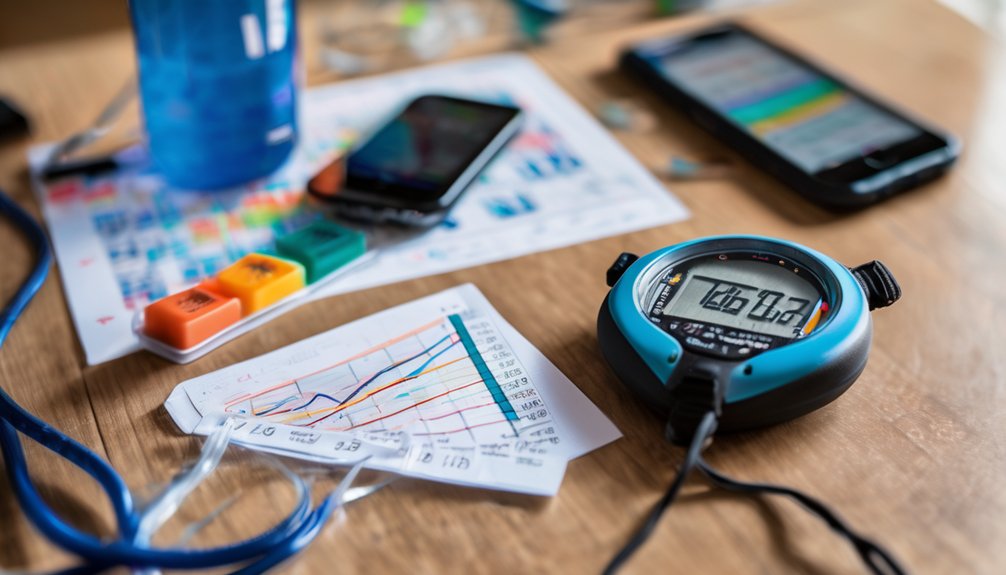
A pace calculator or chart can save you time when you want a quick, reliable answer. You enter your distance, your target pace, or your finish time, and calculator tools do the math for you. That’s helpful when you’re planning race day, training runs, or pace strategies with your crew.
| Input | Result |
|---|---|
| 5 miles at 9:00/mile | 45:00 |
| 10K in 50:00 | 8:03/mile |
If you prefer a chart, find your distance in one column and read across to your pace or time. Use it to compare options fast, then choose the effort that fits your goal. You’re not guessing alone—you’re making a smart, confident choice with your running community.
What’s the Difference Between Pace and Speed?
Pace and speed both describe how fast you’re moving, but they’re not the same thing.
Pace tells you how long it takes you to cover one mile or kilometer, so you can track effort in a way that feels practical and personal. Speed tells you how much distance you cover in a set time, which can sound more technical, but it matters too.
When you focus on pace training, you build steady control and stay connected to your goals. When you work on speed endurance, you teach your body to hold quicker effort longer.
You don’t need to choose one forever. Use both to understand your running, stay with your crew, and keep improving with confidence, one session at a time.
How to Estimate Race Time for Common Distances
Once you know your pace, you can estimate race time for any distance by multiplying that pace by the miles or kilometers you plan to run. That simple math helps you picture your finish time for a 5K, 10K, half marathon, or marathon.
If you run 10-minute miles, you’ll finish a 5K in about 31 minutes and a half marathon in about 2 hours 11 minutes. Use these estimates to set goals, plan fueling, and stay confident with your running crew.
On race day, a realistic target keeps you focused and calm. Review your training tips, compare recent workouts, and adjust for hills or heat.
A realistic goal keeps you steady on race day—trust your training, your workouts, and the course.
You’ve got this, and your next start line is already within reach.
Common Running Pace Calculation Mistakes to Avoid
Even confident runners can miscalculate pace if they skip a few basic checks, but you can avoid most mistakes with a simple, consistent method.
First, confirm your distance units before you divide time by miles or kilometers. Next, don’t round too early, since small pace estimation errors can turn into big finish-time surprises.
You should also ignore common pacing myths, like believing a “comfortable” start always leads to a steady race. Hills, wind, and course turns change your effort, so factor them in.
If you use a watch, verify auto-lap settings and GPS accuracy. Finally, practice with a few sample calculations so the process feels natural.
When you check your math and trust the numbers, you’ll join runners who pace with confidence and finish stronger.
Frequently Asked Questions
How Do Hills Affect My Running Pace?
Hills slow your pace uphill and can boost it downhill, so you’ll need pacing adjustments. Hill training builds strength, and understanding elevation impact helps. Use a smart downhill strategy, and you’ll feel stronger together.
Should I Adjust Pace for Hot Weather?
Yes, you should slow slightly in hot weather. Use smart hydration strategies, build heat acclimation gradually, and listen to your body. You’ll stay safer, feel stronger, and keep showing up with your running community.
How Often Should I Recalculate My Race Pace?
Recalculate your race pace every 2–4 weeks, especially after training adjustments or injury. Don’t worry—you’re not overthinking it. Regular check-ins sharpen your race day strategies, keep you connected, and help you finish strong.
Does Treadmill Pace Match Outdoor Pace Exactly?
No, it usually doesn’t match exactly. You’ll notice treadmill calibration, outdoor conditions, pace perception, and incline adjustments can shift effort. Trust your training, compare times carefully, and you’ll belong to stronger, smarter runners.
What Pacing Strategy Helps Avoid Early Burnout?
You should start conservatively and finish faster; for example, if you’re racing 10K, hold back early, then push late. This negative splits approach uses smart pacing tactics, so you won’t burn out and you’ll feel included.
Conclusion
Now you know how to calculate your running pace and finish time, so you can plan each run with confidence. Keep your distance and time units consistent, and use a calculator or chart when you need a quick check. Think of pace like a metronome—it keeps your training steady and focused. With a little practice, you’ll estimate race times more accurately, set realistic goals, and stay motivated as you keep improving mile after mile.