
How to Estimate the Cost of a Home Renovation
To estimate your home renovation cost, you need to break the project into clear parts: scope, materials, labor, permits, and a contingency for the unexpected. You’ll want to compare DIY trade-offs with contractor pricing, then weigh quotes against your budget and priorities. The numbers can shift fast once you account for room-by-room details, so the real challenge is knowing where the hidden costs are likely to appear next.
Key Takeaways
- Define the renovation scope, priorities, and must-have items before pricing anything.
- Estimate materials room by room using accurate measurements, waste factors, and quality levels.
- Calculate labor by trade, task complexity, and local rates, especially for specialized work.
- Add permits, design fees, and hidden issue contingencies like plumbing, wiring, or water damage.
- Compare itemized contractor quotes against your budget and trim scope if totals exceed available funds.
What Drives Home Renovation Costs?

Home renovation costs depend on a few core variables, and the biggest one is scope: the more rooms you touch and the more structural or system-level work you do, the higher the bill.
You’ll also see costs rise when design trends push you toward custom finishes, specialty fixtures, or harder-to-source details. Material quality matters too; cabinets, tile, flooring, and appliances can shift your total quickly.
Labor rates change by region, and skilled crews often charge more for complex work. If your home has hidden issues like old wiring, plumbing problems, or water damage, you’ll pay more once they’re uncovered.
You’re not alone in facing these variables; every project balances ambition, function, and durability. Focus on where upgrades truly add value.
Set Your Home Renovation Budget
Before you compare quotes or choose finishes, set a clear renovation budget that separates must-haves from nice-to-haves. You’ll feel more confident when you rank renovation priorities and assign dollars to each one. Use budgeting strategies that cap spending, then add a contingency for surprises so your plan stays steady.
| Budget focus | Action |
|---|---|
| Essential work | Fund first |
| Flexible upgrades | Limit or defer |
Review your total against your household cash flow, savings, and financing limit. If the numbers feel tight, trim scope before you start, not after. That’s how you protect your timeline and stay in control with your community of renovators. A realistic budget helps you make disciplined choices, compare bids fairly, and avoid drifting into decisions that don’t serve your home or your goals.
Estimate Materials for Each Room
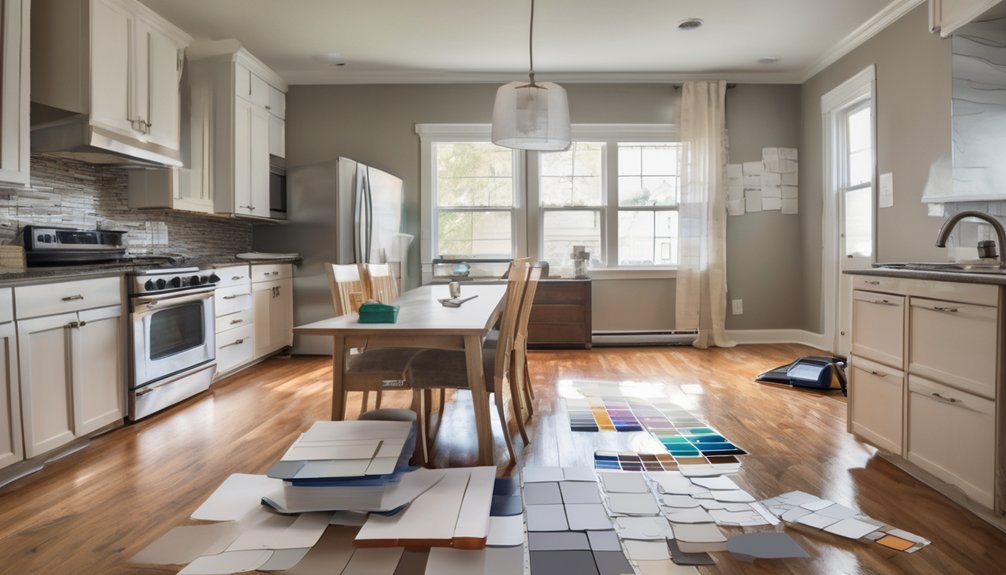
Start by breaking each room into measurable material line items so you can price the job accurately.
List flooring, paint, trim, fixtures, cabinets, and hardware for each space, then match quantities to room specifics. Measure walls, floors, and openings carefully, and add a small waste factor for cuts and mistakes.
Compare material sourcing options from local suppliers, big-box stores, and online vendors so you can balance cost, quality, and availability.
Keep your notes organized by room, because kitchens, bathrooms, and bedrooms often need different grades and finishes.
When you estimate this way, you’ll see where your money goes, spot gaps early, and feel more confident moving through the project with people who understand your goals.
Calculate Home Renovation Labor Costs
Labor costs usually make up a large share of a renovation budget, so you need to price each task by trade, scope, and time.
Use local rates and compare them with your project’s skill levels.
| Task | Labor estimate |
|---|---|
| Demolition | 6–12 hrs |
| Framing | 8–16 hrs |
| Plumbing | 4–10 hrs |
| Electrical | 6–14 hrs |
| Finish work | 8–20 hrs |
Multiply each hour by the crew rate you’re seeing in the labor market, then adjust for complexity, access, and site conditions. You’ll often pay more for specialized work, tight spaces, or fast turnaround. Break the job into line items, then total them so you can spot overruns early. When you estimate carefully, you’re joining other homeowners who plan confidently and avoid surprise costs.
Add Permits, Fees, and Design Costs

After you’ve priced the work itself, add permits, plan reviews, inspection fees, and design costs to get a truer renovation total.
Check your city’s permit types early, because electrical, plumbing, structural, and zoning work often each need separate approvals.
You’ll also want to account for design fees if you hire an architect or designer to finalize layouts, drawings, or code-ready plans.
These charges can shift with project size, complexity, and local rules, so request itemized quotes before you commit.
By grouping these costs with labor and materials, you’ll see the full financial picture and make choices that fit your budget.
When you and your contractor stay aligned on paperwork, you reduce delays and keep your renovation moving with confidence.
Build in a Contingency for Surprises
Even the best renovation plans can change once demolition begins, so set aside a contingency fund before work starts.
A good rule is to reserve 10% to 20% of your total budget for unexpected expenses. You’ll protect your project from small shocks, like damaged wiring, hidden moisture, or material price jumps, without scrambling for cash.
This buffer also helps you keep your renovation timeline on track when issues arise, because you can approve needed fixes quickly. Track the reserve separately from your main budget, and only use it for real surprises, not wish-list upgrades.
If you finish with money left, you’ve managed risk well and can redirect it to finishing touches that make your space feel like home.
Compare DIY Costs vs Hiring Pros
Before you commit to a budget, compare what you can realistically do yourself against what you’ll need to hire out, because the cheapest option up front isn’t always the least expensive overall.
DIY Benefits can lower labor costs, but only when your Skill Levels match the Project Complexity. Add up tools, materials, permits, and your Time Investment before calling it savings.
DIY can save labor only when your skills match the project; count tools, permits, materials, and time first.
When a task needs Professional Expertise, you gain Quality Assurance, fewer mistakes, and better Long term Value. Think about Cost Efficiency, not just cash today, so you can make choices that fit your home and your people.
- Simple painting: good DIY fit
- Electrical work: hire a pro
- Demolition: assess safety first
- Tile setting: compare precision needs
- Cabinet install: weigh experience versus schedule
Get Accurate Quotes From Contractors
Once you’ve decided which parts of the renovation you can handle and which ones need a pro, the next step is to get quotes that let you compare real costs, not guesses. Ask at least three contractors for itemized bids so you can spot gaps fast. Clear contractor communication helps them price the same scope, not assumptions.
| Item | Low | High |
|---|---|---|
| Labor | $4,000 | $7,000 |
| Materials | $2,500 | $5,000 |
| Permits | $300 | $900 |
When you see numbers side by side, you feel less alone in the process and more in control. Use quote comparison to weigh experience, timeline, and responsiveness, then choose the team that matches your budget and feels dependable.
Review Your Estimate Before You Start
After you collect quotes and rough totals, review your estimate line by line so you know exactly where your money will go. Check labor, materials, permits, delivery, and cleanup, then compare each item against your scope.
If one number feels high, ask for updated cost breakdowns and confirm what’s included. Build in budget adjustments for surprises like hidden damage or price swings, but keep them controlled.
- Verify measurements and quantities
- Match materials to project quality
- Flag allowances and exclusions
- Confirm payment milestones and timing
- Set aside contingency funds
This step helps you spot gaps before work starts, so you can join the project with confidence and avoid costly stress.
When everything adds up cleanly, you’re ready to move forward as part of a well-prepared renovation team.
Frequently Asked Questions
How Long Does a Typical Home Renovation Take?
You’ll usually spend 4–12 weeks on a typical home renovation, depending on scope, permits, and materials. Your renovation timeline shifts through project phases, so plan carefully and coordinate early to stay on track.
Which Renovations Add the Most Resale Value?
You’ll usually get the strongest resale lift from kitchen upgrades and bathroom remodels, especially when you choose durable finishes, smart layouts, and neutral design; buyers feel at home, and you’ll recoup more confidently.
What Financing Options Are Available for Renovations?
You can use personal loan options, home equity loans, or a HELOC to fund renovations. You’ll compare rates, fees, and terms, then choose what fits your budget, timeline, and sense of financial security.
How Do I Choose the Right Renovation Contractor?
Think of a contractor like a knight in a spreadsheet: you’ll check contractor credentials, compare project timelines, and choose someone who communicates clearly, meets deadlines, and shares your standards so you feel confident and included.
When Is the Best Time of Year to Renovate?
Spring and fall usually work best; you’ll get milder weather, steadier crews, and fewer delays. Plan spring renovations early, and use winter projects for interior upgrades, since contractors often offer better availability and pricing.
Conclusion
Now you can pull your renovation estimate together with confidence. You’ve defined the scope, priced materials, added labor, permits, and design fees, and set aside a contingency for surprises. You’ve also compared DIY savings against professional rates and gathered contractor quotes. When you review the numbers, make sure they line up with your priorities and budget. If they do, you’re in the home stretch and ready to move forward without nasty financial surprises.