Simple Ways to Calculate Flooring Materials
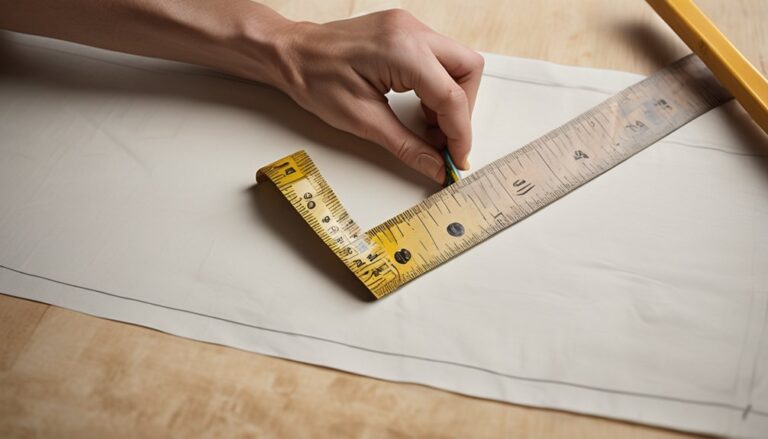
To calculate flooring materials accurately, you need to start with the right measurements and a clear plan. You’ll see how to measure each part of the room, convert those numbers into square footage, and add the extra material that cuts and pattern changes demand. A small mistake can lead to shortages or waste, so the details matter more than you might think.
Key Takeaways
- Measure each room accurately with a tape or laser measure, including alcoves, closets, and irregular sections.
- Calculate square footage by multiplying length by width, or split odd-shaped spaces into smaller rectangles.
- Add 5% to 10% extra material for cuts, waste, and future repairs.
- Adjust estimates for the flooring type, since tile, hardwood, and planks have different coverage and layout needs.
- Double-check the order details, including square footage, box count, product type, and delivery date.
Measure Your Room for Flooring
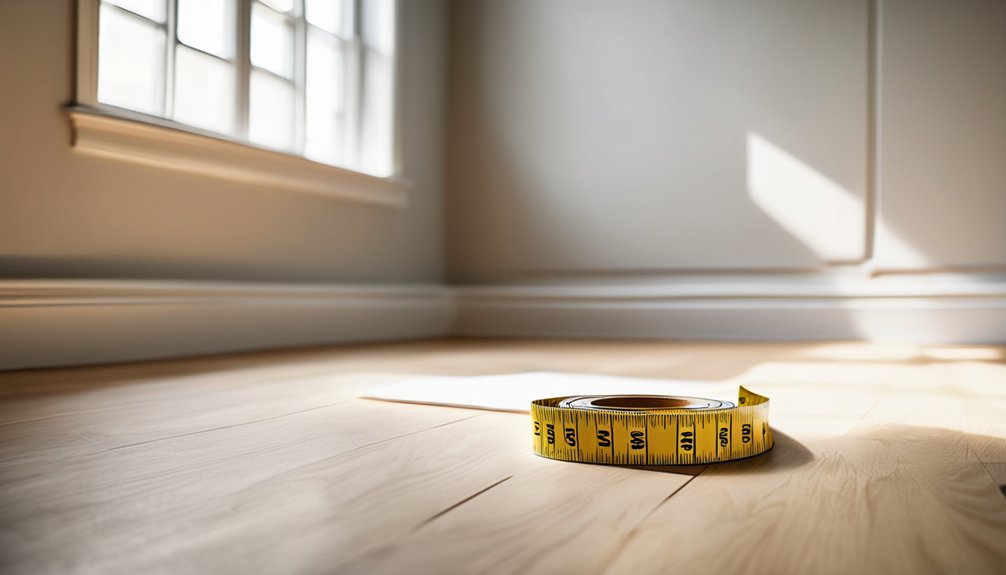
Before you buy flooring, measure the room carefully so you know how much material you need. Use reliable measuring tools, like a tape measure or laser measure, and record each wall length. Measure the room dimensions from wall to wall, then check both sides if the space isn’t perfectly square.
Write down every number as you go, because small errors can create waste later. If the room has alcoves, closets, or built-ins, measure those areas too so your layout stays accurate. You’re not doing this alone; careful measuring helps your project feel organized and keeps your team on the same page.
Double-check your notes before moving forward. Accurate measurements give you confidence and help you choose flooring that fits your space cleanly and efficiently.
Calculate Flooring Square Footage
Multiply the room’s length by its width to find the square footage you need for flooring.
If your room isn’t a perfect rectangle, break it into smaller shapes, calculate each area, then add them together.
You can use measurement tools like a tape measure and a notepad to keep your numbers clear. Flooring calculators can speed things up, but you should still check the math yourself so you feel confident in your estimate.
Write every dimension in the same unit, usually feet, before you calculate. If you measure in inches, convert them first. This simple step helps you stay organized and keeps you on track with your flooring plan.
Once you know the square footage, you’re ready to choose materials with your crew.
Add Extra for Cuts and Waste
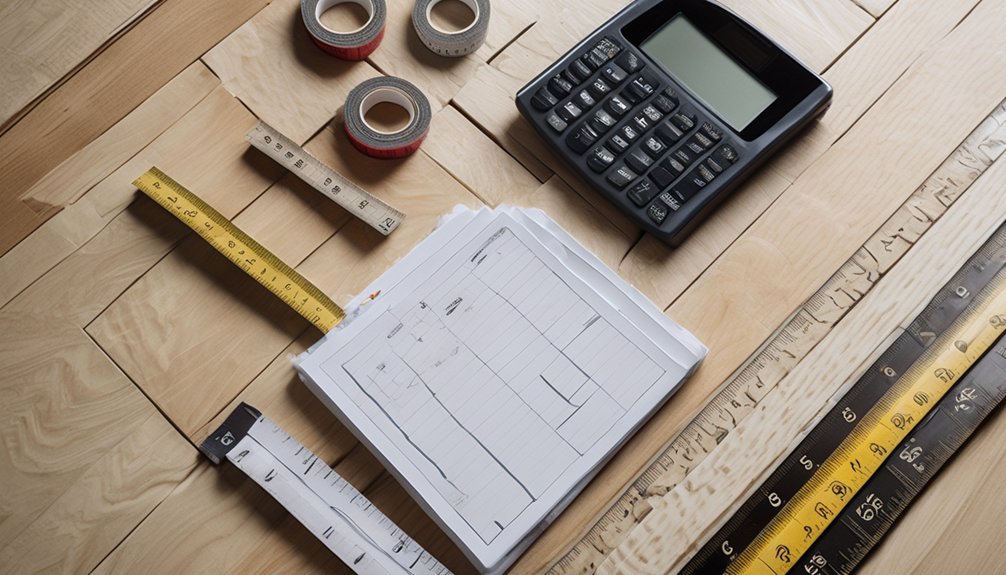
After you’ve figured out the square footage, add a buffer for cuts, mistakes, and material waste. You’re not overbuying; you’re protecting your project and keeping the crew on track. A 5% to 10% add-on usually covers most rooms, and it helps you stay confident when the layout gets tricky.
- Measure twice so you can cut once.
- Add more for rooms with angles, alcoves, or tight corners.
- Keep a few extra pieces for repairs and matching later.
- Track leftovers to support waste management and material efficiency.
When you plan this way, you join the homeowners who finish cleanly and avoid last-minute shortages. That small cushion gives you control, saves time, and keeps your flooring project moving smoothly.
Adjust for Your Flooring Material
Your flooring material changes the math, so adjust your estimate to match what you’re installing. Different material types cover space differently: tile needs grout lines, hardwood may require staggered boards, and carpet comes in set widths.
Check the manufacturer’s coverage rate, then compare it with your room size. If you’re using planks, account for board length and layout direction, since those affect how much you’ll need.
Check the manufacturer’s coverage rate, then compare it with your room size and layout direction.
Installation methods matter too. Glue-down, nail-down, and floating systems can change waste and coverage, so don’t use a one-size-fits-all number.
You’ll get a better estimate when you match the material to the method. That way, your order fits your project, and you can work with confidence as part of a well-prepared crew.
Double-Check Your Flooring Order

Once you’ve matched the estimate to the material, check the order before you buy it. You’ll protect your budget and keep your project on track by reviewing every detail with care. Open the order confirmation and verify the square footage, box count, and delivery date.
Then compare the material types listed with the product you selected, since a small mismatch can change coverage and cost.
- Confirm the product name and finish.
- Check the quantity against your measurements.
- Make sure waste allowance is included.
- Review shipping, returns, and lead time.
If anything looks off, ask for a correction right away. You deserve an order that fits your space, your timeline, and your crew.
Frequently Asked Questions
How Do I Estimate Flooring Costs Before Buying?
Measure your area, then multiply by the flooring’s price per square foot and add 10% for waste. Compare material types, include underlayment and labor, and check your budget considerations before you buy.
Can I Use Floor Plans Instead of Measuring Manually?
Yes, you can use floor plans, but verify floor plan accuracy first. For best results, pair them with digital measuring tools. You’ll avoid shortages, waste, and costly mistakes, and feel confident planning your flooring.
What Tools Make Flooring Measurement Easier?
You’ll want measuring tools and digital apps—they’re the fastest way to reduce guesswork. Start with a laser measure, tape, and square; then let an app track rooms, totals, and cuts, so you feel confident.
How Do Stairs Affect Flooring Calculations?
Stairs affect your flooring calculations because you’ll measure each tread and riser separately, then add stair dimensions to your total. You’ll also plan material transitions carefully so your finished look feels seamless and included.
Should I Buy Extra Flooring for Future Repairs?
Yes—you should buy extra flooring for future needs. A small surplus softens tomorrow’s little mishaps and supports material durability. You’ll fit in better with seamless repairs, and you won’t scramble if boards need replacing.
Conclusion
Now you can measure your room, multiply length by width, and add a little extra for cuts and waste. You’ll order smarter when you adjust for tile, hardwood, or carpet quirks. Double-check your numbers before you buy, so you avoid costly shortages and cluttered leftovers. With a careful count, you’ll create a clean, cohesive floor that fits beautifully. These simple steps help you shop with confidence and start your project smoothly.