How to Estimate Shipping Costs and Package Sizes
You can avoid unpleasant surprises when you ship by sizing things up before you pay. When you measure your package, weigh it accurately, and factor in distance, speed, and extra fees, you get a much clearer estimate. Dimensional weight can change the price more than you’d expect, and carrier rates don’t always match. Once you see how those pieces interact, the real savings start to show.
Key Takeaways
- Measure package length, width, and height accurately, including bulges and flaps, using a ruler or tape measure.
- Weigh the package with a calibrated shipping scale to the nearest ounce for precise rate estimates.
- Consider distance, delivery speed, seasonal demand, and extra service fees when calculating total shipping costs.
- Check dimensional weight pricing, since carriers may charge based on package volume instead of actual weight.
- Save money by using compact packaging, consolidating shipments, and comparing carrier rates and service levels.
How Shipping Costs Are Calculated
Shipping costs are usually calculated by combining several factors, including package weight, dimensions, shipping distance, delivery speed, and any added service fees.
Shipping costs are usually calculated by combining weight, dimensions, distance, speed, and added service fees.
You can estimate your rate by comparing the parcel’s size and weight against carrier tables, then checking shipping zones that map where your package travels.
If your box exceeds certain weight limits, you may move into a higher pricing tier, so measure carefully before you ship.
You’ll also see charges reflect how far the package must go and how quickly it needs to arrive.
When you understand these inputs, you can plan with confidence, avoid surprises, and feel like you’re part of a smarter shipping process.
Clear estimates help you choose the best option for your needs and budget.
What Raises Shipping Costs?
Several factors can push your shipping total higher, especially when your package is large, heavy, or needs to arrive quickly.
You’ll usually see fuel surcharges added on top of base rates, and premium packaging materials can nudge costs up too. Shipping to distant delivery zones often costs more, while insurance options increase protection and price.
During seasonal demand, carriers raise rates because everyone’s shipping at once, so planning ahead helps you stay in control. If your parcel nears weight limits, you may trigger higher pricing tiers.
More frequent shipment frequency can sometimes earn better rates, but one-off sends rarely do. For international rates, customs handling and longer transit paths often add extra charges.
When you understand these drivers, you can make smarter choices and ship with confidence together.
Measure Your Package Correctly
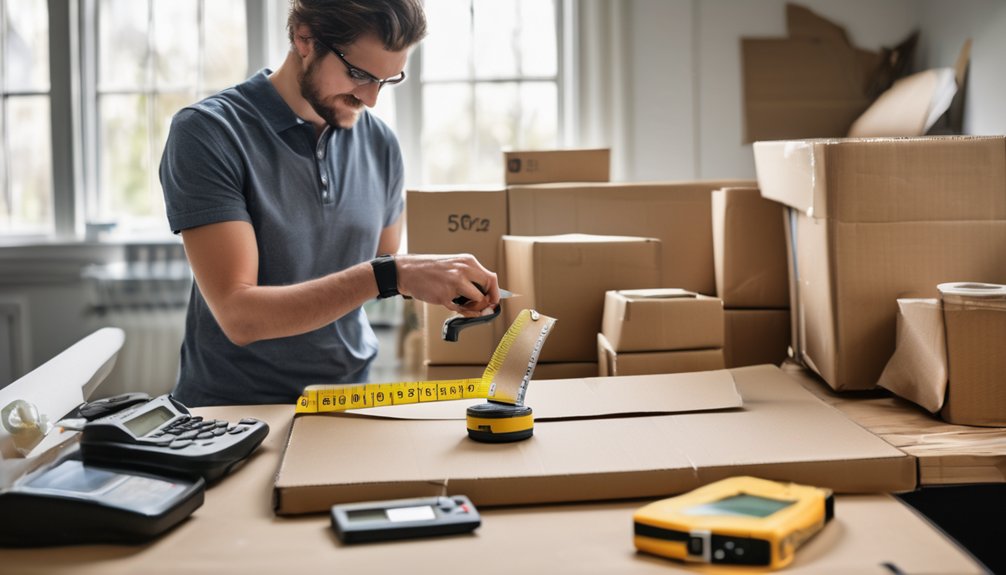
To estimate shipping costs accurately, you need exact package measurements before you compare rates. You can’t rely on rough guesses if you want to join the smart shippers who avoid surprise fees.
Use reliable measurement tools, like a ruler or tape measure, and record the longest length, widest width, and tallest height of the box. Measure straight across each side, including any bulges, flaps, or protective wrap that change the package dimensions.
Always measure in the same units the carrier uses, so you don’t create conversion errors. Check each dimension twice, because even a small mistake can shift your rate quote.
When you measure carefully, you stay in control, compare services with confidence, and make sure your shipment fits the category you expect.
Weigh Your Package Accurately
Place your package on a reliable scale and note the exact weight before you compare shipping rates. You’ll get cleaner estimates when you use calibrated shipping scales and record the number to the nearest ounce. If you’re shipping several items, weigh each one separately, then combine them so you can spot surprises early. Keep package dimensions nearby, too, because size affects packing choices and helps you verify that the box matches the load.
| Check | Result |
|---|---|
| Scale reading | Exact weight |
| Label review | Match items |
How Dimensional Weight Pricing Works
Once you’ve got the package’s actual weight, the next number to check is its dimensional weight, which carriers use when a box takes up more space than its mass would suggest.
You calculate it by multiplying length, width, and height, then dividing by the carrier’s DIM factor. If the dimensional weight is higher than the actual weight, you’ll usually pay the higher amount.
That’s why slim, compact packing often lowers costs. You can also compare pricing strategies across carriers, since each one may round measurements differently or apply separate DIM rules.
When you understand this formula, you’ll spot why oversized boxes cost more and make smarter choices together with your shipping team. This keeps your estimates realistic and your budget more predictable.
Choose the Best Shipping Speed
How fast do you really need the package to arrive? Start by matching the shipment to the moment that matters most for your customer or team.
If the item supports a launch, event, or urgent replacement, choose express shipping options and accept tighter delivery timeframes. If the package is routine, standard service usually gives you the best balance of speed and practicality.
You’ll save stress by checking transit estimates against your deadline, then adding a small buffer for weather, holidays, and local delays. That way, you stay in control and your package fits your plan.
When you choose thoughtfully, you’re not just moving boxes—you’re helping your people feel confident, included, and cared for.
Compare Carrier Rates and Fees
Now compare at least three carriers side by side so you can see the real total, not just the headline rate. You’ll get better carrier comparisons when you include base rate, surcharges, and delivery guarantees in one view. That keeps you in the know and helps you feel confident with every shipment.
| Fee item | What to check |
|---|---|
| Base rate | Zone, weight, and size limits |
| Surcharges | Residential, fuel, and peak charges |
| Add-ons | Signature, insurance, and pickup fees |
| Terms | Claim rules and rate negotiation options |
Review each quote the same way, then total everything before you decide. When one carrier looks cheaper, verify that its fees don’t erase the savings. If you ship often, ask about account-specific pricing and note how each carrier handles discounts.
How to Save on Shipping Costs
To cut shipping costs, start by matching the service level to the shipment’s true needs, because paying for speed you won’t use drives up your total fast.
You can lower rates by consolidating orders, comparing carriers, and asking about shipping discounts for volume or repeat business.
Choose packaging materials that fit tightly, so you reduce dimensional weight and protect items without extra filler.
Measure each box before you ship, then verify that the package size matches the label you buy.
When you standardize supplies and track every fee, you spot waste quickly.
You also build a smarter, more connected shipping routine with your team, which helps everyone send efficiently and confidently.
Small adjustments add up, and consistent review keeps your costs competitive without sacrificing reliability.
Frequently Asked Questions
How Do I Estimate Shipping for International Packages?
You estimate international shipping by measuring weight, dimensions, destination, and carrier rates, then adding customs fees and insurance. Compare quotes online, check duties, and choose the option that fits your budget and delivery timeline.
Can I Ship Fragile Items Without Extra Packaging?
No, you shouldn’t ship fragile items without extra packaging; imagine a glass figurine in a jolting box. You’ll need cushioning, fragile labeling, and shipping insurance. Extra protection cuts breakage, preserves your peace, and keeps you confident.
What Packaging Materials Work Best for Odd-Shaped Items?
Use custom packaging for odd-shaped items, then surround every edge with protective padding like foam, bubble wrap, or molded inserts. You’ll reduce shifting, protect fragile corners, and feel confident your item fits snugly and ships safely.
How Do I Track a Package After Shipping?
You’ll track it by using the carrier’s tracking number on their site or tracking apps; if you’re worried it’s tedious, it isn’t—enable delivery notifications, check status updates, and confirm the estimated arrival.
What Should I Do if a Package Is Lost?
Contact the carrier immediately, file a claim, and keep your tracking number handy. You should document missing items, photos, and receipts, then alert the seller so you’re supported, informed, and ready for a resolution.
Conclusion
To estimate shipping costs well, you need to measure, weigh, and compare with care. If you skip one step, what happens? Costs climb. Use accurate dimensions, check dimensional weight, and match the shipping speed to the urgency. Then compare carrier rates, fees, and packaging options to keep expenses down. When you plan precisely, you ship smarter—and save more. That’s the bottom line: small details can make a big difference.