Simple Cooking Conversions for Better Recipes
About 70% of home cooks say small measuring errors change a recipe’s result. If you want more consistent dishes, you need simple conversions at your fingertips. You’ll see how teaspoons, tablespoons, and cups connect, when to halve or double with confidence, and where metric swaps can go wrong. One overlooked detail can shift flavor, texture, or yield more than you’d expect.
Key Takeaways
- Cooking conversions keep recipes consistent and help maintain balanced flavor and texture.
- Use basic measures: 3 teaspoons equal 1 tablespoon, and 16 tablespoons equal 1 cup.
- Convert metric and U.S. units with a reliable chart for faster kitchen math.
- When scaling recipes, multiply or divide every ingredient by the same factor.
- Measure dry and liquid ingredients correctly to improve accuracy and reduce mistakes.
Why Cooking Conversions Matter
Cooking conversions matter because they help you get consistent results every time you cook or bake. You rely on them for cooking accuracy, so your measurements match the recipe’s intent.
When you scale ingredients correctly, you protect recipe consistency and avoid surprises at the table. You also keep flavor balance steady, which means sauces, batters, and doughs taste the way they should.
Good conversions help you compare ingredient proportions fast, whether you’re halving a meal or doubling a favorite dish. That confidence makes you feel at home in the kitchen, like you belong there.
Good conversions help you balance ingredients quickly, whether you’re halving a recipe or doubling your favorite dish.
You don’t have to guess, and you don’t have to hope. You just follow the numbers, trust your process, and cook with more control each time.
Common Cooking Conversion Chart
When you need quick kitchen math, a common cooking conversion chart gives you the most-used equivalents at a glance. You can keep it on your fridge, inside a drawer, or saved on your phone so it’s always ready.
Use it to move between metric and U.S. measures, or to compare weights, volumes, and temperatures without second-guessing yourself. These conversion tools help you follow recipes from any source and keep your results steady.
They also support simple cooking hacks, like scaling a meal for guests or halving a recipe after a busy day. When you cook with a shared chart, you join a kitchen habit that saves time, reduces mistakes, and makes every step feel easier.
Convert Teaspoons, Tablespoons, and Cups
One simple rule handles most kitchen conversions: 3 teaspoons make 1 tablespoon, and 16 tablespoons make 1 cup. You can trust these teaspoon equivalents when a recipe feels unfamiliar. Use tablespoons for dressings, sauces, and dry spice mixes; they help you measure quickly and stay consistent. If you need a smaller amount, drop to teaspoons.
| Measure | Equals |
|---|---|
| 1 teaspoon | 1/3 tablespoon |
| 3 teaspoons | 1 tablespoon |
| 16 tablespoons | 1 cup |
Keep this chart close, and you’ll move through recipes with confidence. When you measure accurately, you fit right in with cooks who value reliable results. Use the right spoon, level it off, and keep going.
Halve and Double Recipes
Once you’ve got teaspoons, tablespoons, and cups lined up, scaling the recipe gets easier. You can halve or double with confidence when you keep recipe scaling simple and make clean ingredient adjustments.
Start by changing every amount by the same factor, then check small items like salt, spices, and leaveners.
- Halve 2 cups to 1 cup.
- Double 3 tablespoons to 6 tablespoons.
- Halve 1 teaspoon to 1/2 teaspoon.
- Double 1/4 cup to 1/2 cup.
Stay alert with eggs, since odd amounts can need rounding. Taste as you go, and you’ll keep the flavor balanced.
Stay alert with eggs and other tricky ingredients, and taste as you go to keep flavors balanced.
When you cook this way, you join a group of home cooks who trust the math and the meal.
Swap Metric and U.S. Units
Swapping metric and U.S. units is easier than it looks once you know the basic equivalents. You can move between cups, tablespoons, grams, and milliliters with a simple chart or calculator, and you’ll cook with more confidence.
Metric advantages include cleaner decimals and easier scaling, especially when you want to fit into a trusted recipe community that values consistency. U.S. units still work well for familiar home cooking, so use the system that matches your source and your comfort.
For unit precision, round carefully and keep the same system through a recipe whenever possible. When you convert before you start, you reduce guesswork and stay connected to the flow of the meal, not the math.
Measure Dry and Liquid Ingredients Correctly
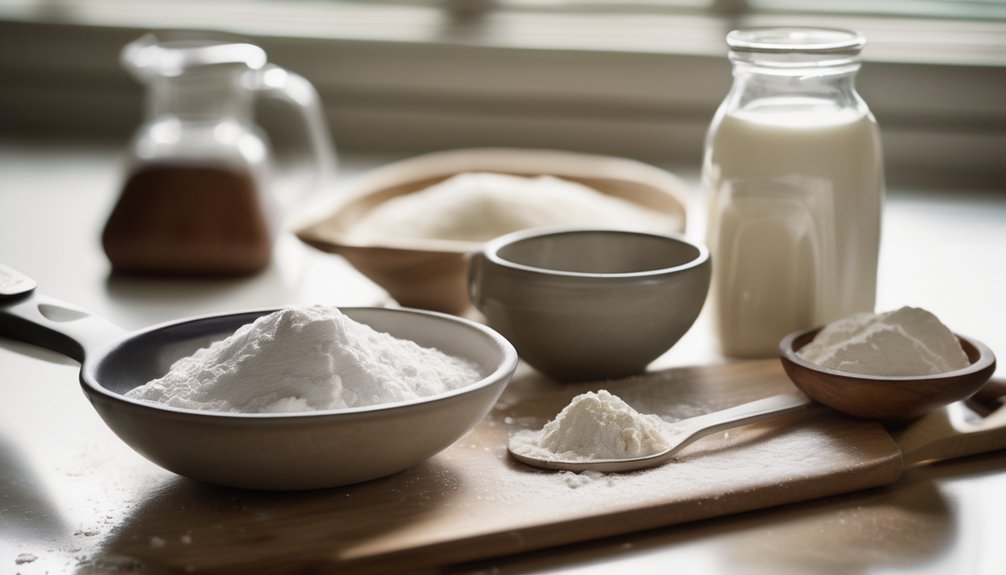
Dry and liquid ingredients need different measuring tools, and using the right one keeps your recipe on track. You’ll fit right in when you use clear measuring techniques that match each ingredient’s texture and ingredient density.
- Scoop flour into a dry cup, then level it with a straight edge.
- Pack brown sugar firmly so it holds its shape.
- Pour milk or oil into a liquid cup and read at eye level.
- Set your bowl on a flat counter before you measure.
These habits help you stay accurate, cook with confidence, and get repeatable results. When you measure this way, you join the cooks who make conversions work smoothly every time.
Common Cooking Conversion Mistakes
A small conversion slip can throw off an entire recipe, so you need to watch for the common mistakes that trip cooks up. Don’t confuse weight and volume, because one cup of flour isn’t the same as one cup of sugar by mass.
You also shouldn’t level every ingredient the same way; brown sugar, chopped nuts, and liquids each need their own approach. Always check your units before you scale a recipe, and don’t guess when halving or doubling. That’s where measurement accuracy matters most.
Ingredient variability can also change results, so trust your eyes and the recipe together. When you stay careful, you join the cooks who get consistent, reliable results every time.
Frequently Asked Questions
How Do Altitude Changes Affect Cooking Conversion Results?
At high altitude, you’ll need pressure adjustments because lower air pressure changes moisture levels and evaporation rates, so your cooking conversions shift; you’ll often add liquid, lower temperature, and extend time for reliable results.
Can Ingredient Density Change Conversion Accuracy?
Yes—ingredient density can shift conversions a lot; a cup of flour may weigh 20% less than packed sugar. You’ll boost measurement precision by checking ingredient weight, accounting for density variations, and using trusted conversion formulas.
What Tools Help Measure Sticky Ingredients Cleanly?
A sticky spatula and a lightly oiled measuring cup help you handle sticky ingredients cleanly. You’ll scrape, level, and release mixtures without waste, and you’ll feel confident using tools that make cooking smoother together.
How Do Conversion Needs Differ for Baking Versus Cooking?
Baking demands exact baking ratios, so you’ll convert carefully and keep temperature adjustments precise. Cooking’s more forgiving; you can taste and tweak as you go. Measure twice, cook once—you’ll fit right in.
When Should You Round Measurements up or Down?
You should round up when a slight increase won’t hurt and down when precision matters, especially in baking. Follow rounding guidelines, because measurement precision keeps your results consistent and helps you feel confident.
Conclusion
You’ve seen how simple cooking conversions keep your recipes on track. You can trust the basics: 3 teaspoons make 1 tablespoon, and 16 tablespoons make 1 cup. If you halve, double, or swap metric and U.S. units, you’ll get better consistency and fewer mistakes. Check whether your measurements are dry or liquid, and you’ll protect flavor and texture. With these tools, you’re ready to cook more confidently and get reliable results every time.